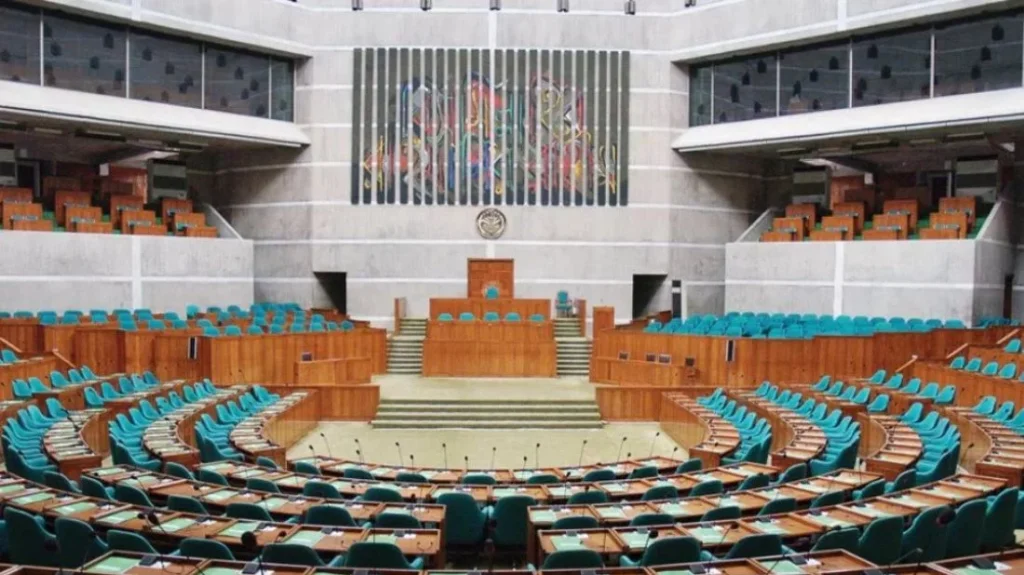
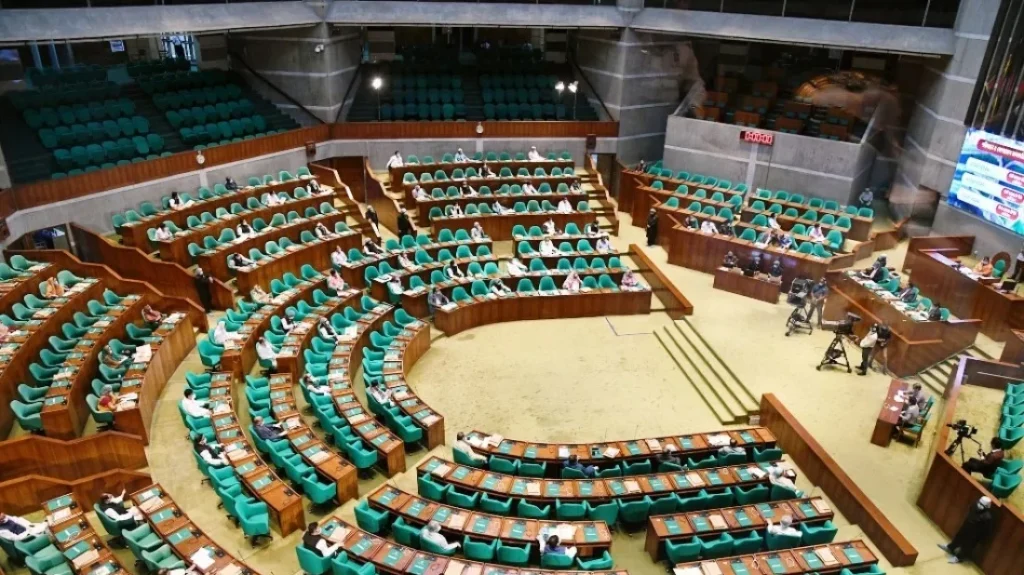
How a second house can produce long-term stability and good governance (Part2)

Concept and functions of proposed upper house. This is the concluding part of a two-part series The basic concept could then be as follows. One of the two chambers would be relatively unchanged, a lower house consisting of politicians who have won from their constituencies in free and fair elections. The majority party in the […]

Read More… from How a second house can produce long-term stability and good governance (Part2)

Towards a bicameral system: How a second house can produce long-term stability and good governance (Part 1)

  The main problem with the Bangladesh Constitution is that the post of prime minister is too powerful. This comes about because in our single house system the Jatiyo Sangsad is almost the sole repository of power. As a result whoever is the leader of the majority party has unlimited scope to do whatever he […]

Read More… from Towards a bicameral system: How a second house can produce long-term stability and good governance (Part 1)

India’s chance to earn its rightful place in the sun

It shouldn’t be difficult for Modi to mobilise global support Just got back from Delhi a few days ago, and I’m still slightly reeling from the blow of its huge blast. The towering government offices which house India’s civil and military establishment, South Block and its ilk, have shed the dusty sleepiness I remember from […]

Read More… from India’s chance to earn its rightful place in the sun

The other little master

Sunil Gavaskar’s grit and tenacity made him a batsman of the highest order Researching my recent article on Hanif Muhammad (“Hanif Muhammad’s Epic Innings,” Dhaka Tribune, August 17), I became increasingly interested in the crucial differences between big scores made in the first and second innings of a Test match. In brief, the batsman has […]

Read More… from The other little master